Introduction
Social media advertising has become the most widely adopted paid media channel among small businesses in 2026, and for compelling reasons. With a daily investment as modest as $5 to $15, a small business can effectively reach thousands of highly targeted potential customers within its local area or specific niche market. This combination of reach, targeting precision, and accessibility at a comparable cost is unparalleled by other advertising channels.
However, this low barrier to entry also presents a risk of inefficient spending. Many small businesses often boost posts indiscriminately, target overly broad audiences, and prioritize vanity metrics like likes and impressions over tangible outcomes such as leads and sales. This approach can lead to an ad budget that, despite its small size, feels expensive due to a lack of measurable return.
This guide provides a clear framework for small businesses to navigate social media advertising in 2026. It covers essential aspects such as platform prioritization, effective budget allocation, creative strategies that yield results, and how to measure the metrics that truly drive business growth.
Which Platforms Should Small Businesses Prioritize?
With numerous social platforms vying for your advertising budget, selecting where to concentrate your efforts is a critical strategic decision. While the optimal choice depends on your audience and product type, data from 2026 small business surveys offers a foundational framework:
Meta (Facebook + Instagram)
Meta remains the default starting point for most small businesses. A significant portion of small businesses (reportedly 56%) currently utilize social media ads, with Meta dominating due to its extensive scale, diverse demographic reach, and user-friendly self-serve tools. It is particularly well-suited for local businesses, e-commerce ventures, and service providers targeting consumers generally aged 25–55.
Instagram (within Meta)
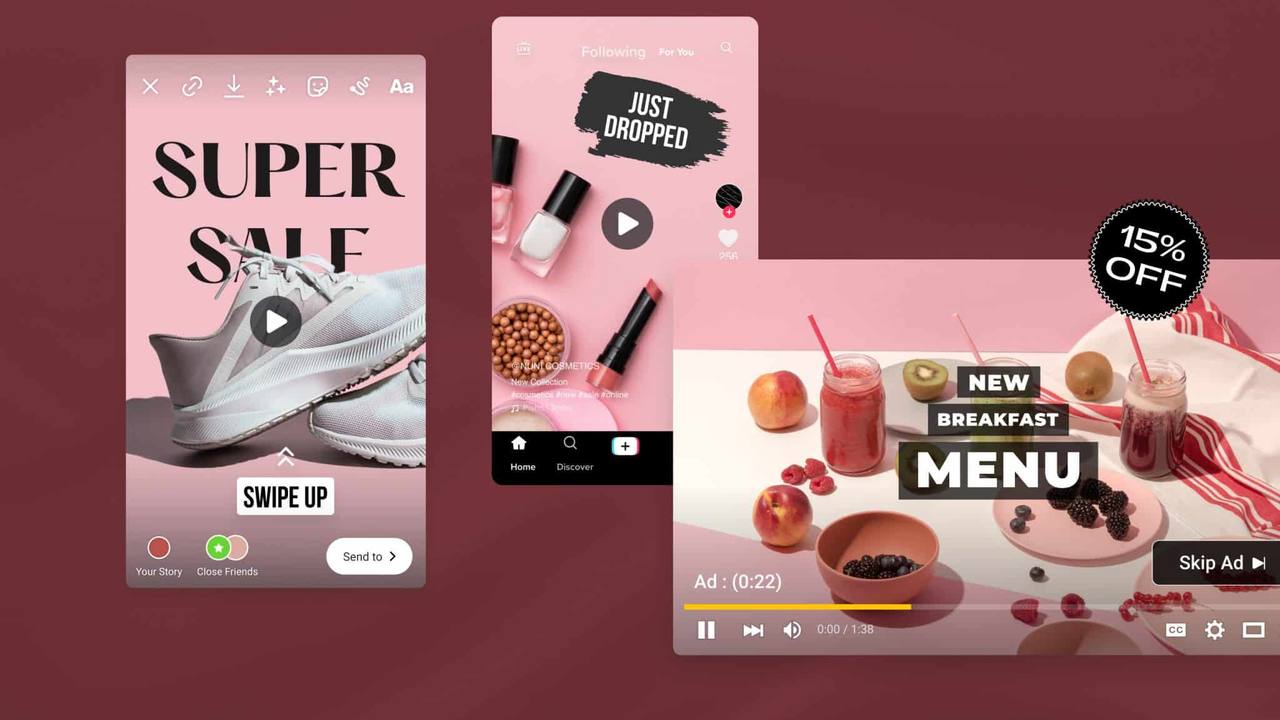
Instagram is especially effective for businesses with a strong visual component, such as those in food, fashion, beauty, home decor, fitness, and hospitality. Instagram Reels placements, in particular, can offer high organic-like reach at potentially lower CPMs compared to standard feed advertisements.
TikTok
TikTok's importance for small businesses is growing, especially for those targeting demographics aged 18–35 and product-based businesses that can leverage TikTok Shop. If your product lends itself well to video demonstrations, TikTok is a platform worth exploring, even with a limited budget.
Facebook Marketplace and Groups
These platforms represent often-underestimated free and low-cost channels for local product sellers and service providers. They can effectively complement paid advertising efforts by fostering an organic presence in relevant local communities.
Recommendation: Begin your social media advertising journey with Meta (utilizing combined Facebook + Instagram placements) until you have a proven offer and creative that consistently converts. Once established, expand to TikTok, applying the insights gained from your Meta campaigns.
The Small Business Budget Playbook: Start Small, Scale Winners
The most cost-effective social media advertising strategy for small businesses in 2026 often involves amplifying content that is already performing well organically, rather than solely relying on purpose-built ad campaigns for cold audiences.
The Organic-First Boosting Strategy:
- Post organically: Share content on your Facebook or Instagram page.
- Identify top performers: After 24–48 hours, identify your top 2–3 posts based on engagement rate (prioritizing comments and shares over just likes).
- Boost strategically: Promote these high-performing posts to a targeted local audience with a budget of $5–$15 per day.
This approach minimizes guesswork, as you are investing in content already proven to resonate with your audience. Furthermore, existing likes and comments on the boosted post provide valuable social proof, enhancing trust and conversion rates for new viewers. This strategy tends to outperform cold ad creative for small businesses because it allocates paid budget behind content with demonstrated appeal, rather than using paid spend to test content viability.
Monthly Budget Guidance: A budget of $300–$800 per month can be sufficient for a small business to maintain consistent local visibility using this strategy, equating to approximately $10–$27 per day.

Creative Strategy: What Actually Works for Small Businesses
1. UGC (User-Generated Content) Over Polished Production
One of the most significant paid media trends for small businesses in 2026 is the clear dominance of authentic, user-generated content (UGC) over highly polished, professionally produced advertisements. UGC posts have been observed to generate higher click-through rates and can reduce cost-per-click compared to brand-produced creative. Small businesses are uniquely positioned to leverage this trend.
How to build a UGC content library on a small budget:
- Solicit reviews: Encourage existing customers to share short video or photo reviews of their experience in exchange for a small discount or gift.
- Amplify customer content: Repost and amplify customer photos and videos (with explicit permission) as paid social content.
- Create authentic behind-the-scenes content: Develop your own 'behind the scenes' or 'day in the life' content. Authenticity from the business owner or team is often one of the most effective content formats for small businesses.
- Use real people and locations: Prioritize using real staff, genuine locations, and actual customers instead of generic stock images. Audiences can readily discern the difference.
2. Serialized Video Content: A 2026 Small Business Growth Engine
While short-form video continues to dominate across platforms, serialized content—recurring video series with consistent themes, formats, and characters—is gaining substantial traction for small businesses in 2026.
Serialized content fosters habit formation. When viewers anticipate and look forward to the next 'episode,' they are more likely to follow your account, engage consistently, and develop brand loyalty that can translate into purchase intent. Two effective formats for small businesses include:
- Behind-the-scenes series: Offer weekly or bi-weekly glimpses into your operations, team, product creation process, or customer success stories. This humanizes your brand and helps build a community.
- Expert tip series: Create short, practical tip videos within your area of expertise. Examples include a small accounting firm sharing '60-second tax tips' or a bakery presenting an 'ingredient of the week.' These series establish authority and encourage organic shares.
Once a series demonstrates strong organic engagement, consider boosting individual episodes as paid ads to extend their reach beyond your existing followers.
3. Micro-Influencer Partnerships: Authentic Reach at Accessible Costs
While macro-influencers with millions of followers are typically beyond the budget of most small businesses, micro-influencers—creators with 5,000 to 100,000 followers in a specific niche or geographic area—offer a more valuable proposition for local and niche businesses: genuine community trust and highly engaged, relevant audiences.
Micro-influencer partnerships for small businesses in 2026:
- Cost-effective: Typical costs range from $50–$500 per post for local/niche micro-influencers, significantly less than the $5,000–$50,000+ often associated with macro-influencers.
- Amplify content: Utilize platforms like Spark Ads (TikTok) or Branded Content Ads (Meta) to amplify influencer content, extending its reach beyond their organic audience.
- Prioritize relevance: Focus on relevance over sheer follower count. A food blogger with 8,000 local followers may be more valuable to a local restaurant than a lifestyle creator with 500,000 national followers.
- Start with product gifting: For nano-influencers (those with under 10,000 followers), consider initiating partnerships through product gifting (zero cash cost) before committing to paid collaborations.
Targeting: Local and Interest-Based for Maximum Efficiency
For most small businesses, hyper-local targeting represents the most efficient allocation of social ad budget. Targeting individuals within a 5–25 km radius of your business (or within a specific city for service-based businesses) effectively minimizes irrelevant impressions and can significantly reduce CPM (Cost Per Mille).
Recommended targeting stack for local small businesses on Meta:
- Location: Define your target area by city or a radius around your business address, adjusting based on your actual service area.
- Age: Align the age range with your actual customer demographic. Avoid broad targeting (e.g., 18–65) if your primary buyers are, for instance, 30–50.
- Interests: Add a maximum of 2–3 relevant interests. Excessive restrictions can lead to smaller audiences and potentially higher CPMs.
- Lookalike Audiences: Once you have accumulated 100+ customers in your CRM or email list, create a 1–2% lookalike audience within Meta. This can be highly effective for cost-efficient prospecting campaigns.
- Retargeting: Establish a custom audience of website visitors and social media engagers. This 'warm' audience typically represents your highest-converting segment and should receive a portion of your monthly budget.
What to Measure: The 3 Metrics That Actually Matter
Small business owners can often feel overwhelmed by the multitude of metrics available in platforms like Meta Ads Manager and TikTok Ads. To simplify reporting and focus on tangible business outcomes, concentrate on these three key metrics:
- Cost Per Lead (CPL) or Cost Per Purchase: This is the ultimate efficiency metric. It answers the question: What did you pay for each new customer inquiry or sale? This metric serves as your primary guide.
- Return on Ad Spend (ROAS): For product-based businesses, ROAS (calculated as revenue divided by ad spend) directly indicates the profitability of your campaigns. Aim for a minimum benchmark ROAS of 3x or higher.
- Frequency: This metric indicates how many times the average person in your audience has seen your advertisement. A frequency exceeding 4–5 for the same creative suggests audience fatigue, signaling a need to refresh your creative assets or expand your target audience.
It is crucial to avoid optimizing solely for metrics such as likes, follows, reach, or impressions, unless your specific campaign objective is brand awareness. While these metrics can be encouraging, they do not directly contribute to revenue or business growth.
Real-Time Execution: Responding to What's Working Now
One of the most significant shifts in small business marketing for 2026 is the move away from rigid monthly content calendars towards a more agile, real-time execution approach. Social platforms now provide performance data within hours, enabling businesses to quickly identify what resonates with their audience and amplify successful content within the same week.
Practical approach: Review your active boosted posts every Monday morning. Pause any underperforming content (e.g., click-through rate below 1%, or cost per lead significantly above target). Conversely, increase the daily budget by 20–30% on posts that are performing at or below your cost per lead target. This weekly optimization cycle, when consistently applied, can lead to substantially improved results compared to a static, set-and-forget strategy.
Conclusion
Social media advertising offers small businesses access to a level of targeted reach that was once prohibitively expensive through traditional media channels. In 2026, advancements in AI-powered ad delivery have further enhanced its efficiency. The businesses that succeed are not necessarily those with the largest budgets, but rather those that prioritize authenticity, local relevance, and responsiveness to their performance data.
Begin by leveraging your best organic content, boost it with a modest daily budget, meticulously track the metrics that truly matter, and build upon your successes. A small budget, coupled with clear intent and consistent execution, forms the winning formula for social media advertising in 2026.
Ready to elevate your social media advertising?
GerenciAds specializes in helping small businesses maximize their ROI on platforms like Meta, Instagram, and TikTok. Contact us today for a free consultation and discover how our tailored strategies can transform your ad spend into measurable growth.
Need help applying this to your campaigns?
GerenciAds helps businesses turn strategy into practical account improvements, clearer measurement, and more reliable growth. Contact us if you want support turning these ideas into action.